The personal care landscape is undergoing a massive transformation driven by educated consumers who aggressively scrutinize ingredient labels. This shift demands clean, sulfate-free formulations that respect the delicate microbiome of the skin. While this evolution promotes healthier skin and hair, it presents a substantial technical hurdle for cosmetic chemists. Formulators frequently struggle to thicken mild, amino acid-based cleansing systems. Traditional thickening agents often compromise the inherent gentleness of a formula, ruin its visual clarity, or leave behind an undesirable sticky residue.
To navigate these complex formulation challenges, industry professionals increasingly turn to Methyl Glucose Dioleate. Widely recognized in its commercial water-soluble form as PEG-120 Methyl Glucose Dioleate, this compound has established itself as the gold-standard solution for elevating challenging surfactant systems. It empowers chemists to achieve precise viscosity control while maintaining a premium sensory profile. In this comprehensive technical guide, we will explore the unique chemical architecture of this ingredient, its mechanism of action, its rigorous safety profile, and practical processing protocols for high-performance cosmetic development.
Industry Trends: The Shift Toward Microbiome-Friendly Cleansing
Analyzing current market trajectories reveals a sharp decline in the use of aggressive anionic surfactants like Sodium Lauryl Sulfate. Modern consumers demand rich, luxurious foam without the associated barrier disruption. Consequently, brands are pivoting toward ultra-mild cleansing matrices utilizing glutamates, isethionates, and glucosides.
Furthermore, this transition exposes a critical rheology gap. These mild surfactants do not respond to traditional salt thickening. As a result, the industry requires specialized polymeric or associative thickeners that can build viscosity without introducing irritation. Ingredients derived from natural sugars and botanical fatty acids perfectly align with this trend, offering both the clean-label appeal consumers want and the chemical reliability formulators desperately need.
Chemical Architecture and Origins
To fully grasp the value of this cosmetic additive, one must first examine its chemical origins from an engineering perspective. At its core, the molecule is a specialized diester. It is synthesized by reacting methyl glucose—a sugar typically derived from renewable corn—with oleic acid, a fatty acid found abundantly in botanical oils. This natural derivation pathway provides a remarkably strong foundation for its ultimate biocompatibility.
In its raw ester state, the compound is highly emollient but stubbornly resists dissolving in water. To bridge this gap and make it suitable for aqueous cosmetic formulations, the raw material undergoes a highly controlled ethoxylation process. This precise transformation creates PEG-120 Methyl Glucose Dioleate, the ubiquitous water-soluble variant utilized across global cosmetic laboratories. Within a given formula, this versatile ingredient serves a dual mandate. Primarily, it acts as a robust rheology modifier. Secondarily, it functions as a mild non-ionic surfactant, assisting in the removal of daily grime without stripping vital structural lipids.
Formulation Mechanics and Technical Parameters
The science of thickening mild surfactant systems relies heavily on intricate molecular interactions rather than brute force. This ingredient operates through a sophisticated mechanism known as associative thickening. The molecule features a large water-loving polyethylene glycol chain flanked by water-repelling oleate tails. In an aqueous solution, these hydrophobic tails actively seek out and associate with the micelles formed by other cleansing agents. This creates a complex, interconnected three-dimensional gel network that boosts viscosity without requiring high concentrations of drying salts.
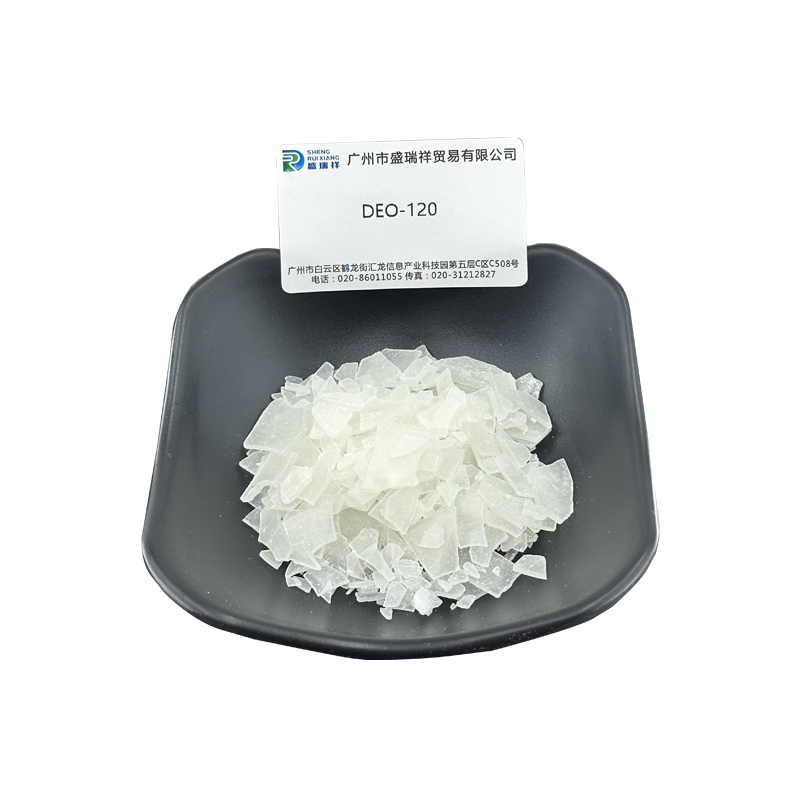
Specifically, when evaluating cosmetic-grade raw materials, formulators must look for strict technical benchmarks to ensure batch-to-batch consistency. High-quality variants typically feature the CAS Number 86893-19-8 and present as pale yellow flakes. Crucial parameters include an acid value strictly below 4.0 mg KOH per gram and a saponification value ranging between 14 and 26 mg KOH per gram. Meeting these exact specifications guarantees optimal clarity and stable rheology in the final commercial product. By integrating directly into the surfactant micelles, the compound forces the creation of larger, more resilient structures, which translates to the dense, long-lasting foam consumers expect.
Rheology Modifiers: A Comparative Analysis
Selecting the correct thickener dictates both the aesthetic appeal and the commercial viability of a cleansing product. Below is a technical comparison between modern sugar-derived esters and traditional thickening agents.
Thickening Agent
Mechanism
Sulfate-Free Compatibility
Sensory Profile
Irritation Potential
PEG-120 Methyl Glucose Dioleate
Associative Micellar
Excellent
Luxurious, cushiony, clean rinse
Extremely Low
Sodium Chloride
Electrolyte adjustment
Very Poor
Can feel drying or stripping
Moderate
Cocamide DEA
Micellar swelling
Moderate
Good foam, but regulatory concerns
Moderate to High
Carbomer Polymers
Polymeric network
Good
Can leave a tacky or plastic film
Low
In stark contrast to outdated alkanolamides, utilizing a high-efficiency thickening emulsifier based on methyl glucose provides a significantly cleaner toxicological profile. It perfectly aligns with modern clean beauty standards while outperforming traditional salts in amino acid systems.
Commercial Value and Formulation Benefits
One of the primary reasons formulators gravitate toward this ingredient is its unparalleled gentleness. Instead of obliterating the lipid barrier like traditional high-foaming anionic surfactants, this non-ionic ester cleanses with finesse. It effectively lifts away environmental pollutants and excess sebum while leaving the stratum corneum intact. Consequently, users never experience that uncomfortable tight feeling after rinsing.
Beyond its inherent mildness, it possesses a fascinating ability to actively buffer the harshness of other primary surfactants. When paired with robust cleansers, altering the micellar dynamics reduces the concentration of free surfactant monomers. These tiny molecules are responsible for penetrating and irritating the skin and eyes. This unique anti-irritation property makes it a foundational staple in the development of tear-free baby shampoos and dermatological facial washes.
In addition, tactile feedback dictates perceived product quality the moment a cleanser hits the consumer's hands. This additive significantly elevates the sensory profile of liquid cleansers. It imparts a smooth lather that glides effortlessly over the skin, transforming a mundane daily wash into a premium ritual.
Formulator's Selection Guide and Processing Protocols
From a laboratory perspective, successful implementation requires precise processing. Standard industry usage rates typically range from 0.5% to 5.0% by weight of the total formulation. The exact dosage depends heavily on the primary surfactant matrix being utilized and the target final viscosity.
Imagine standing in the pilot plant preparing a new batch. Because of its high molecular weight and solid flake form, this ingredient demands thermal processing. Formulators must heat the water phase or the primary surfactant phase to approximately 60°C to 75°C. This ensures the solid flakes melt and dissolve completely. Rushing this step or using insufficient heat will inevitably lead to a grainy texture or unstable viscosity as the product ages on the shelf.
Aeration is the enemy of a pristine clear gel. When working with highly viscous systems, trapped air bubbles become a frequent headache. To circumvent this, engineers should switch to low-shear sweep-mixing techniques the moment the flakes are fully dissolved. Implementing a controlled uniform cooling phase is vital for establishing a stable long-lasting gel network that resists separation during extreme temperature fluctuations in transit.
Toxicological Profile and Safety Standards
Objective safety data is the bedrock of consumer trust. On independent safety databases, this specific ingredient consistently receives highly favorable ratings. It is classified as having a remarkably low risk for developmental toxicity alongside a minimal risk for dermal and ocular irritation. Extensive dermatological assessments confirm that it is highly non-comedogenic. It absolutely will not occlude follicular pathways or trigger breakouts, making it entirely safe for reactive or blemish-prone skin types.
It is also crucial to maintain transparency regarding the polyethylene glycol component of the molecule. The ethoxylation process can theoretically generate trace byproducts. However, reputable industry-leading raw material suppliers employ rigorous vacuum-stripping and tightly controlled manufacturing protocols to eradicate these impurities. Consequently, the final cosmetic-grade material easily meets the most stringent global safety regulations.
Conclusion and Sourcing Recommendations
This unique ester stands as a masterclass in cosmetic chemistry, perfectly bridging the gap between natural sourcing and advanced rheological performance. By delivering unparalleled mildness, exceptional clarity, and a deeply luxurious texture, it solves the most persistent challenges associated with modern sulfate-free product development. As the global personal care market continues its relentless march toward gentler formulations, this mild and effective surfactant will undoubtedly continue to dominate the ingredient decks of premium brands. We highly encourage formulation engineers to evaluate their current cleansing matrices and source high-purity grades from trusted suppliers like Skincarematerial to experience its transformative properties firsthand.
Frequently Asked Questions
Is Methyl Glucose Dioleate safe for sensitive skin?
Yes, it is exceptionally mild, non-irritating, and widely considered safe for all skin types. Extensive toxicological evaluations confirm its suitability for use on highly sensitive skin, compromised skin barriers, and delicate baby skin. It actively reduces the irritation potential of other surfactants in the formula.
Is PEG-120 Methyl Glucose Dioleate considered vegan?
Generally, yes. The methyl glucose portion is derived from natural corn sugar, and the oleic acid is typically sourced from plant-based oils like olive or sunflower oil. Formulators should always verify the exact origin with their specific raw material supplier to guarantee that no animal by-products were utilized during manufacturing.
Does this ingredient cause acne or clogged pores?
No, it does not. It is a highly non-comedogenic ingredient, meaning it will not clog pores or exacerbate acne conditions. This makes it an excellent and safe addition to facial cleansers specifically formulated for acne-prone or oily skin profiles.
Why is it preferred in sulfate-free shampoos?
Sulfate-free surfactant systems are notoriously difficult to thicken using traditional inexpensive methods like salt. This ingredient effectively builds luxurious viscosity in these mild systems without requiring harsh additives, all while actively boosting the density and stability of the foam.
How does PEG-120 Methyl Glucose Dioleate differ from PEG-150 Distearate?
While both are highly effective non-ionic thickeners for surfactant systems, they differ in their molecular structure and sensory output. PEG-120 Methyl Glucose Dioleate utilizes a bulky sugar ring and unsaturated oleic acid tails, which often provides a superior, cushiony skin feel and better clarity in certain amino acid surfactant matrices compared to the linear stearic acid tails of PEG-150 Distearate.
What is the best way to dissolve this thickener in a cold-process formula?
This ingredient is not suitable for true cold-process manufacturing. Due to its high melting point and flake form, it must be heated to at least 60°C to 75°C in either the water phase or the surfactant phase to ensure complete, uniform dissolution. Attempting to cold-process it will result in undissolved particles and phase separation.