
Views: 0 Author: Site Editor Publish Time: 2025-12-30 Origin: Site


Dry, cracked skin is a common struggle, especially in colder months. So, how can we keep our skin hydrated and soft?
In this article, we will explore the different types of moisturizing agents, their functions, and how to select the best one for your skin. Whether your skin is dry, oily, or sensitive, you’ll learn which moisturizing agents work best for you.
| Type of Moisturizing Agent | Common Ingredients | Function | Advantages | Challenges |
|---|---|---|---|---|
| Humectants | Hyaluronic acid, Glycerin, Aloe Vera | Draws moisture from the air and deeper skin layers | Effective for hydration, keeps skin plump and hydrated | Less effective in low humidity, may draw moisture from skin |
| Emollients | Squalane, Ceramides, Vitamin E, Rosehip oil | Softens skin by filling in gaps between skin cells | Smooths rough patches, enhances skin texture and radiance | May feel greasy, not ideal for oily or acne-prone skin |
| Occlusives | Petroleum Jelly, Shea Butter, Silicones | Creates a barrier to prevent moisture loss | Excellent for dry skin, provides long-lasting moisture | Can feel heavy or sticky, may not suit oily skin types |
Humectants are ingredients that help hydrate the skin by drawing moisture from the environment or deeper layers of the skin to the surface. By attracting water molecules, they boost the skin’s moisture levels, helping it stay plump and hydrated. Humectants work best when paired with other moisturizing agents, like emollients and occlusives, to help lock the moisture in and prevent it from evaporating.
Common Ingredients: Hyaluronic acid, glycerin, aloe vera, propylene glycol.
Advantages and Challenges:
Advantages: Humectants are excellent at absorbing moisture and ensuring hydration, making them effective for treating dry skin. They work by pulling moisture into the skin, thus enhancing its hydration and moisture retention.
Challenges: While they are great at drawing moisture into the skin, humectants can be less effective in low-humidity conditions. In such environments, they may draw moisture away from the skin, causing potential dryness.
Humectants work best when paired with other moisturizing agents like emollients and occlusives. This combination can help lock the moisture in, preventing it from evaporating from the skin.
Emollients are ingredients that help soften the skin and improve its texture by filling in the gaps between skin cells. These agents create a smooth and soft surface while ensuring that moisture is retained, making the skin feel nourished and supple. Emollients work well with humectants and occlusives to provide balanced hydration and a smooth texture.
Common Ingredients: Squalane, ceramides, Vitamin E, rosehip oil, lanolin.
Advantages and Challenges:
Advantages: Emollients not only hydrate but also enhance the skin’s appearance by smoothing rough patches, filling in the cracks, and making the skin feel softer and more youthful. They are great for improving skin texture and making it look more radiant.
Challenges: Some emollients, especially those derived from oils, may not be suitable for oily or acne-prone skin. While they provide great moisture, they may feel greasy, which can clog pores in sensitive or oily skin types.
Choose emollients like squalane or ceramides if you want a non-greasy option that helps restore your skin’s moisture balance without clogging your pores or contributing to excess oil production.
Occlusives are heavier agents that form a protective layer on the skin’s surface, effectively preventing moisture loss. These agents create a physical barrier that traps hydration, making them especially useful for dry and damaged skin that needs extra protection. Occlusives help to seal in moisture and provide a longer-lasting effect.
Common Ingredients: Petroleum jelly, shea butter, silicones, dimethicone.
Advantages and Challenges:
Advantages: Occlusives are incredibly effective for very dry skin, as they help seal in moisture for extended periods. They form a barrier that keeps moisture from evaporating, making them an ideal choice for environments with low humidity or colder weather.
Challenges: They can feel heavy or greasy, which may not be ideal for people with oily or acne-prone skin. Additionally, some occlusives can make skin feel too sticky, which might not be suitable for day-to-day use in hot weather.
Use occlusives like petroleum jelly during the winter or in dry, cold climates to prevent moisture loss and protect the skin from environmental stressors.
Choosing the right moisturizing agent depends on your skin type and its unique needs. Here’s a breakdown of the best options for dry, oily, and sensitive skin.
| Skin Type | Best Moisturizing Agent | Recommended Ingredients | Example Products |
|---|---|---|---|
| Dry Skin | A combination of Emollients and Occlusives | Shea Butter, Petroleum Jelly, Ceramides | Shea Butter Moisturizer, Petroleum Jelly-based Cream |
| Oily Skin | Humectants, lightweight and oil-free moisturizers | Hyaluronic Acid, Glycerin, Aloe Vera | Gel-based Moisturizer, Hyaluronic Acid Serums |
| Sensitive Skin | Gentle Humectants and Emollients | Aloe Vera, Glycerin, Chamomile | Aloe Vera Gel, Fragrance-free Glycerin Cream |
Dry skin often lacks sufficient moisture, leading to a rough and flaky texture. To restore moisture, it’s best to use moisturizers that combine emollients and occlusives. These ingredients help not only to replenish lost moisture but also to create a barrier to lock it in. For dry skin, a combination of humectants, emollients, and occlusives can provide hydration and long-lasting moisture retention.
Example: A moisturizer containing shea butter and petroleum jelly can effectively restore moisture to dry skin and lock it in for long-lasting hydration. This combination helps to soothe and soften the skin while preventing further water loss.
Oily skin may not need as much moisture, but it still requires hydration to maintain balance. The key is to avoid heavy, oil-based moisturizers. Instead, opt for lightweight, oil-free moisturizers with humectants like hyaluronic acid that can hydrate without causing excess oil production. Gel-based moisturizers or water-based formulas are great for oily skin because they provide hydration without the greasy feeling.
Example: Gel-based moisturizers or water-based formulas are the best choice for oily skin. They hydrate effectively without adding extra oil, ensuring that the skin stays moisturized without feeling greasy or heavy.
Sensitive skin requires special attention and care. It’s best to choose moisturizers with gentle ingredients that provide hydration while also soothing and calming the skin. Humectants like glycerin and emollients like aloe vera are perfect for sensitive skin types. Look for products that do not contain harsh chemicals, fragrances, or alcohol, as these can irritate sensitive skin.
Example: Aloe vera gel, combined with glycerin, offers a soothing and hydrating solution for sensitive skin. It calms irritation while providing necessary moisture, making it a gentle yet effective option.
Using a combination of humectants, emollients, and occlusives is key to achieving optimal hydration. Each moisturizing agent plays a unique role, and when combined, they work together to provide both immediate hydration and long-lasting moisture retention. For example, humectants will bring moisture into the skin, emollients will soften and smooth the surface, and occlusives will lock that moisture in, preventing it from evaporating.
A well-formulated moisturizer might contain all three types of agents—such as hyaluronic acid (humectant), squalane (emollient), and dimethicone (occlusive)—for a complete skincare solution that ensures both hydration and protection.
When selecting a daily moisturizer, consider both your skin type and the season. For example, in the winter, your skin may need more occlusives to protect it from the dry, cold air. In the warmer months, opt for lighter, water-based moisturizers that provide hydration without feeling heavy on the skin. Combining the right ingredients based on your skin’s needs will help maintain a healthy and hydrated complexion year-round.
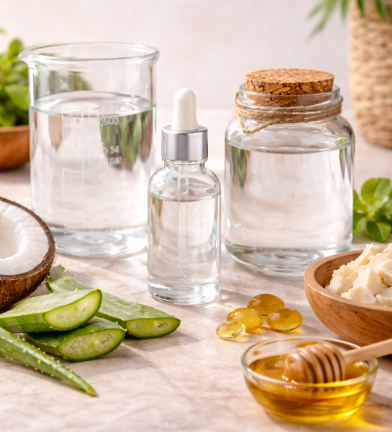
Natural moisturizers are an excellent option for those who prefer products free from harsh chemicals and artificial fragrances. Many natural ingredients offer exceptional moisturizing properties while also providing additional skin benefits such as antioxidants and soothing effects. Natural oils and plant extracts hydrate the skin while nourishing and protecting it from environmental damage.
Natural oils and extracts can deeply hydrate the skin, providing both moisture and essential nutrients. They offer the added benefit of being gentle on the skin, making them ideal for those with sensitive or irritated skin. These ingredients are often rich in vitamins, antioxidants, and fatty acids that nourish the skin.
Common Ingredients:
Coconut oil: Deeply nourishes and hydrates the skin with its rich fatty acids.
Argan oil: Rich in Vitamin E and antioxidants, it helps protect and hydrate the skin.
Honey: A natural humectant that locks in moisture, leaving the skin glowing and smooth.
Natural moisturizers are ideal for people who want to avoid synthetic chemicals and prefer products with fewer additives. These ingredients provide effective hydration while nourishing the skin in a gentle way. Using natural moisturizers also helps reduce the risk of irritation, making them suitable for all skin types, including sensitive skin.
Look for natural moisturizers that combine ingredients like coconut oil and honey for enhanced hydration and skin protection. These ingredients are not only effective at moisturizing but also help to improve the overall health and appearance of your skin.
Choosing the right moisturizing agent is crucial for healthy, hydrated skin. Whether you have dry, oily, or sensitive skin, understanding the roles of humectants, emollients, and occlusives helps you select the best products for your skin. Combining these agents ensures immediate and long-term hydration, keeping skin soft and smooth.
For optimal results, use a combination of moisturizing agents to maintain hydration year-round. Moisturizing helps protect the skin’s natural barrier and enhances its overall function.
Guangzhou Shengruixiang Trading Co., Ltd. offers skincare products designed to keep your skin hydrated and protected. Their products blend advanced moisturizing ingredients for lasting hydration and enhanced skin health.
A: Moisturizing agents are ingredients that help hydrate the skin by attracting moisture or sealing it in. They are crucial for maintaining soft, smooth, and healthy skin.
A: The main types of moisturizing agents are humectants, emollients, and occlusives. Each type works differently to hydrate and protect the skin.
A: Humectants draw moisture from the air into the skin, helping to keep it hydrated and plump. Common humectants include glycerin and hyaluronic acid.
A: Emollients soften and smooth the skin by filling in gaps between skin cells, improving texture and making the skin feel nourished.
A: Occlusives form a barrier to lock moisture in, making them ideal for dry skin. However, they may not be suitable for oily or acne-prone skin due to their heavier texture.
A: Consider your skin type. For dry skin, use a combination of emollients and occlusives; for oily skin, go for lightweight humectants; and for sensitive skin, opt for gentle ingredients like aloe vera.


