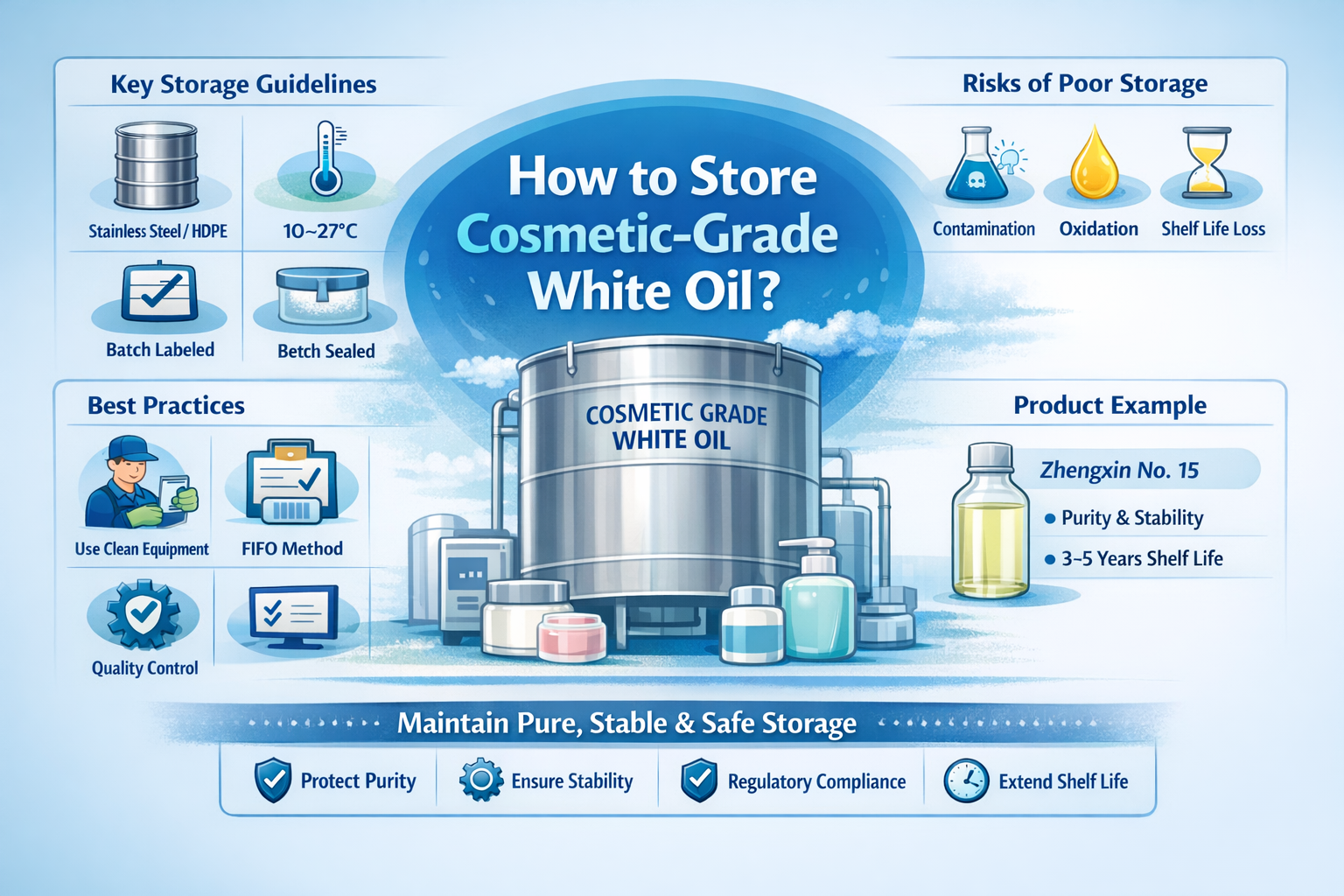
Why does oil lose quality fast? Storage is often the key reason.Cosmetic-Grade White Oil needs proper care. Poor storage causes contamination and loss.In this article, you will learn storage methods. You will understand how to keep quality stable.

Why Proper Storage of Cosmetic-Grade White Oil Is Critical
Proper storage plays a key role in maintaining the integrity of Cosmetic-Grade White Oil, especially in industries where quality and safety directly affect end-user experience and compliance.
Impact on product purity and safety
Cosmetic-Grade White Oil must remain free from contaminants such as dust, water, or reactive chemicals, because even minor impurities can affect product safety and performance.
Effects of contamination on cosmetic formulations
Contaminated oil may lead to unstable formulations, reduced shelf life, or changes in texture and appearance, which can negatively impact product quality.
Shelf life and performance stability
Although Cosmetic-Grade White Oil is highly stable, improper storage can shorten its usable life and reduce its effectiveness in formulations.
Regulatory compliance in cosmetic applications
Strict regulations require controlled storage conditions to ensure product safety, traceability, and consistency across batches.
Core Storage Guidelines for Cosmetic-Grade White Oil
Proper storage requires a combination of correct materials, controlled environment, and strict operational practices to ensure long-term stability.
Choosing the right containers for Cosmetic-Grade White Oil
Using appropriate containers is essential to prevent contamination and maintain purity, and materials such as stainless steel and high-density polyethylene (HDPE) are widely recommended due to their chemical compatibility and durability, while low-quality or reactive containers should be avoided because they may leach substances into the oil or degrade over time and eventually compromise product safety and stability.
Controlling temperature and environment
Maintaining a stable storage temperature between 10–27°C is critical for preserving oil quality, while exposure to high heat or direct sunlight should be avoided because it can accelerate oxidation and reduce stability, and a cool, dry environment helps maintain consistency and prevents unwanted reactions.
Preventing exposure to air and moisture
Cosmetic-Grade White Oil should always be stored in tightly sealed containers to minimize exposure to oxygen and moisture, as both can contribute to degradation and contamination, and frequent opening without proper resealing increases the risk of quality loss over time.
Avoiding contamination during storage
Storage areas should remain clean, organized, and isolated from dust, chemicals, and incompatible materials, while different grades of oil should be clearly separated to avoid cross-contamination and ensure product integrity throughout the supply chain.
Labeling and traceability best practices
Clear labeling that includes product name, grade, batch number, and expiration date is essential for traceability and inventory control, helping prevent misuse while ensuring proper rotation and compliance with regulatory requirements.
Storage duration and shelf life management
Cosmetic-Grade White Oil typically has a shelf life of 3–5 years under proper storage conditions, but regular inspections should be carried out to monitor for any signs of degradation such as discoloration, cloudiness, or odor changes.
Storage Factor | Recommended Practice | Risk if Ignored |
Container | Stainless steel / HDPE | Contamination |
Temperature | 10–27°C | Oxidation |
Air exposure | Keep sealed | Degradation |
Labeling | Full traceability | Misuse |
Standardize storage conditions across all facilities to ensure consistent product quality.
Product Example: Cosmetic-Grade White Oil for Safe Storage and Use
In real production scenarios, the quality of Cosmetic-Grade White Oil directly determines how effective storage practices will be, because even the best storage system cannot compensate for poor raw material quality, and therefore selecting a reliable product is the first step toward stable formulation performance.
A representative example is Zhengxin No. 15 Cosmetic-Grade White Oil (Model: C-15-X02), which is produced in Zhejiang, China, and widely used as a base oil and emollient in cosmetic formulations such as creams, hair oils, lipsticks, sunscreens, baby oils, and facial care products, where both purity and sensory performance are critical.
Key Technical Specifications
Parameter | Value |
Kinematic Viscosity (40°C) | 13.5–16.5 mm²/s |
Density (20°C) | 830–835 kg/m³ |
Flash Point (Open) | ≥180°C |
Flash Point (Closed) | ≥150°C |
Color | +29 (water-white level) |
Yellowing Resistance | ≤ Level 1 |
pH Value | Neutral |
Heavy Metals (Pb) | ≤30 mg/kg |
CAS Number | 8042-47-5 |
These specifications indicate high purity and strong chemical stability, which means that proper storage conditions such as sealed containers, temperature control, and contamination prevention are essential to maintain these properties over time.
Product Advantages
● Sensory friendly: It is colorless, odorless, and transparent, ensuring no impact on product appearance or fragrance.
● Chemical inertness: It does not react with active ingredients, preservatives, or fragrances, maintaining formulation stability.
● Light stability: Strong resistance to yellowing allows long-term storage in products like sunscreens and lipsticks.
● High safety: Low heavy metal content and non-irritating nature make it suitable for sensitive skin and baby products.
Usage and Storage Considerations
Before use, it is important to check container sealing to prevent contamination, and during formulation, the dosage should generally be controlled between 10% and 30% to maintain proper texture and performance, while after handling, basic hygiene practices should be followed to ensure safety and consistency.
High-quality raw materials still require strict storage control to maintain their full performance.
Handling Best Practices for Cosmetic-Grade White Oil
Proper handling is as important as storage, because operational errors often introduce contamination risks even when storage conditions are ideal.
Using dedicated equipment and tools
Equipment such as pumps, hoses, and containers should be dedicated exclusively to Cosmetic-Grade White Oil to avoid contamination from other substances.
Cleaning and maintenance of equipment
Regular cleaning ensures that residues do not accumulate, which helps maintain purity and consistent product performance.
Personal hygiene and protective measures
Operators should follow hygiene protocols such as wearing gloves to minimize contamination risks.
Preventing cross-contamination between grades
Different grades must be stored and handled separately to maintain compliance and product quality.
Use color-coded tools to separate cosmetic-grade materials from industrial ones.
Inventory Management for Cosmetic-Grade White Oil
Efficient inventory management ensures that Cosmetic-Grade White Oil remains within its optimal lifecycle and maintains consistent quality across batches, and applying the FIFO (First-In, First-Out) method helps ensure that older stock is used first, reducing the risk of expired materials entering production, while accurate tracking of stock rotation and usage improves control over inventory flow and minimizes waste. At the same time, well-organized storage layouts are essential for managing large-scale systems, as they reduce operational errors and improve efficiency, and the use of digital tracking and quality control systems further enhances traceability, ensuring compliance with quality standards and maintaining product consistency over time.
Common Storage Mistakes and How to Avoid Them
Different applications require tailored storage strategies to ensure optimal performance and compliance, because each scenario has different requirements for purity and handling. In cosmetic manufacturing, strict hygiene and sealed systems are needed to prevent contamination. Pharmaceutical-grade storage requires stricter controls and monitoring than cosmetic-grade. Bulk storage relies on controlled systems, while small batches need flexible handling and clear labeling. During transport, stable temperature and proper sealing are essential to maintain product quality.
Mistake | Consequence | Prevention |
Wrong container | Contamination | Use approved materials |
Heat exposure | Oxidation | Control environment |
Mixing grades | Quality loss | Separate storage |
Poor labeling | Errors | Standard labeling |
Most storage failures come from simple handling errors, not material defects.
Storage Requirements by Application Scenario
Different applications require tailored storage strategies to ensure optimal performance and compliance.
Cosmetic manufacturing environments
Strict hygiene and contamination control are required, as cosmetic production involves direct skin contact, which means storage areas must be clean, organized, and free from dust or foreign substances, while containers and transfer systems should be sealed and regularly sanitized to maintain product safety and consistency.
Pharmaceutical-grade vs cosmetic-grade storage
Pharmaceutical applications demand stricter controls and monitoring, including more rigorous documentation, sterile handling procedures, and tighter environmental conditions, whereas cosmetic-grade storage still requires high standards but allows slightly more flexibility depending on regulatory requirements and product sensitivity.
Bulk storage vs small-batch usage
Bulk storage requires controlled systems such as large sealed tanks, temperature monitoring, and automated transfer systems to ensure consistency across large volumes, while small-batch usage relies more on flexible containers, precise labeling, and manual handling practices to maintain traceability and reduce contamination risks.
Transportation and temporary storage conditions
Temperature control and sealing are critical during transport, as fluctuations in temperature or exposure to air can affect oil stability, and proper packaging, secure sealing, and controlled logistics help maintain product quality from supplier to production site.
How Storage Affects Cosmetic Performance
Storage conditions directly impact how Cosmetic-Grade White Oil performs in formulations, as improper storage can gradually change its physical and chemical properties, leading to noticeable effects on product quality and user experience. For example, exposure to heat or air may alter viscosity and reduce formulation stability, making products either too thin or inconsistent in texture, while contamination from dust, moisture, or incompatible substances can cause unwanted odor or color changes that affect both appearance and sensory perception. In addition, degraded Cosmetic-Grade White Oil may no longer meet safety or regulatory standards, which increases the risk of skin irritation or compliance issues in finished cosmetic products. Over time, poor storage practices can significantly shorten shelf life, reduce effectiveness, and lead to higher production costs due to waste or reformulation, whereas maintaining stable storage conditions helps ensure consistent performance, reliable quality, and long-term product stability.
Conclusion
Cosmetic-Grade White Oil requires controlled storage conditions to maintain its purity, stability, and performance, and proper handling practices are essential to prevent contamination and degradation throughout its lifecycle, while combining high-quality raw materials with optimized storage systems ensures consistent formulation results and long-term product reliability. By following best practices such as selecting appropriate containers, controlling environmental conditions, and implementing effective inventory management, manufacturers can maximize product value, reduce risks, and maintain competitiveness in the cosmetic market, and Guangzhou Shengruixiang Trading Co., Ltd. provides reliable Cosmetic-Grade White Oil solutions and technical support to help brands achieve stable quality and efficient production.
FAQ
Q: What is Cosmetic-Grade White Oil?
A: Cosmetic-Grade White Oil is a purified mineral oil used in skincare products.
Q: How to store Cosmetic-Grade White Oil?
A: Store Cosmetic-Grade White Oil in sealed containers at 10–27°C.
Q: Why proper storage of Cosmetic-Grade White Oil matters?
A: Cosmetic-Grade White Oil may degrade or get contaminated if stored poorly.
Q: Does storage affect Cosmetic-Grade White Oil quality?
A: Yes, Cosmetic-Grade White Oil quality depends on temperature and sealing.
Q: How long can Cosmetic-Grade White Oil be stored?
A: Cosmetic-Grade White Oil typically lasts 3–5 years if stored correctly.