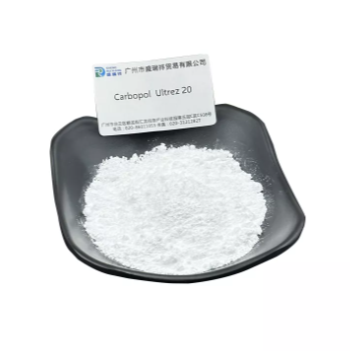
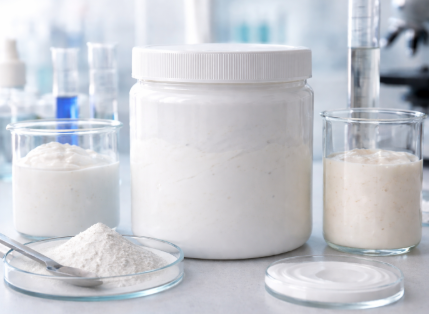
Why Rheology Modifiers Are Critical to Product Stability
What if your best-selling coating starts separating on the shelf? For liquid and semi-solid products, stability can make or break trust. A Rheology Modifier changes how your formula flows, structures, and recovers. In this article, you’ll see how it can boost real-world product stability.

How Rheology Modifiers Connect Directly to Product Stability
Core Dimensions of Product Stability in Formulations
Product stability has two main dimensions: chemical stability and physical stability. Chemical stability covers oxidation, hydrolysis, and degradation of actives. Physical stability covers sedimentation, phase separation, syneresis, and viscosity drift over time.
Many customer complaints relate more to physical issues than to chemical breakdown. Paint may settle and form a hard cake at the bottom of the can. A cosmetic cream may weep oil on the shelf. A sealant may slump on vertical joints after application and curing. To the customer, all of these are “stability failures”.
These failures usually stem from poor control of flow and internal structure. If the product cannot hold its structure at rest, it settles, sags, or separates. In those cases, a Rheology Modifier often becomes the most direct and efficient lever to restore stability.
Rheology Principles that Drive Stability Outcomes
Rheology describes how a material flows and deforms under stress. In practice, we look at viscosity versus shear rate, yield stress, elastic behavior, and time-dependent effects. Most practical formulations show shear thinning. They flow easily when mixed or applied but should rebuild structure quickly once shear stops.
A Rheology Modifier tunes these characteristics. It can raise low-shear viscosity without destroying high-shear flow. It can introduce a yield stress so the product behaves solid-like at rest. It can add thixotropy so viscosity drops under shear and recovers afterward. It can also increase elasticity when needed.
When these features align with the stability targets, products become robust. When they do not, small changes in process, temperature, or storage conditions can break stability and cause field failures.
Typical Instability Problems a Rheology Modifier Can Solve
Across coatings, adhesives, cosmetics, and industrial fluids, we see similar physical failures again and again. Common examples include pigment or filler settling in paints and inks, phase separation in emulsions and creams, sagging of coatings on vertical or overhead surfaces, stringing or cobwebbing during adhesive application, and hard caking in cans or drums after long storage.
A well chosen coating Rheology Modifier can reduce sag and pigment settling at the same time. A cosmetic Rheology Modifier can hold water and oil phases in a stable, pleasant texture. For slurries, a suspension Rheology Modifier helps keep solids dispersed without killing pumpability.
| Instability problem | Visible symptom | Key rheology lever | Example Rheology Modifier type |
| Pigment / filler settling | Hard bottom cake, color shift | Higher low-shear viscosity | Associative thickener, cellulose ether |
| Phase separation in emulsions | Oil layer on top, creaming | Structured continuous phase | Emulsion Rheology Modifier, carbomer |
| Sag on vertical surfaces | Curtains, tears, thick runs | Yield stress, thixotropy | Organoclay, fumed silica, HEUR |
| Stringing / cobwebbing | Threads between nozzle and substrate | Controlled high-shear viscosity | Polyurethane Rheology Modifier |
| Hard caking during storage | Solid mass, difficult to remix | Elastic network, yield stress | Clay-based Rheology Modifier |
Key Ways Rheology Modifiers Improve Product Stability
Using Low-Shear Viscosity to Reduce Settling and Separation
Sedimentation rate depends on particle size, density difference, and viscosity. You often cannot change density or particle size very much without harming performance. You can, however, increase low-shear viscosity to slow settling and separation.
A Rheology Modifier can selectively increase viscosity at rest. It slows particle motion and phase migration, which helps keep pigments, fillers, or droplets suspended for longer periods. This is especially important during storage, shipping, and long shelf life.
The key is to target the low-shear region of the viscosity curve. You want a high viscosity during storage but acceptable flow during mixing, pumping, or application. Associative Rheology Modifiers are particularly useful in waterborne coatings for this purpose.
Building Yield Stress to Prevent Sagging and In-Can Movement
Viscosity alone sometimes cannot stop flow under gravity, especially on vertical surfaces. In those cases, yield stress becomes critical. A material with yield stress behaves like a soft solid until the applied stress exceeds a certain threshold.
Below that threshold, the product will not flow or sag. Above it, the internal structure breaks and flow starts. Rheology Modifiers such as organoclays or specific polyurethane thickeners can build this yield stress.
They create a three-dimensional network inside the liquid that resists sag and in-can movement. For a high-build coating Rheology Modifier, yield stress is often the primary design target. It allows thick films without curtain sag, tears, or edge flow issues.
Creating Thixotropy for Easy Application and Stable Storage
Thixotropy is time-dependent shear thinning and recovery. Under shear, viscosity drops. After rest, viscosity rebuilds over a certain time scale. For many systems, this behavior is ideal.
Thixotropic Rheology Modifiers let users apply the product easily by brush, roller, or spray. When shear stops, the structure recovers and locks the film in place. This combination gives smooth application and strong resistance to sag or leveling defects.
A robust thixotropic Rheology Modifier is common in sealants, putties, gap fillers, and printing inks. It hides high in-can viscosity during application while preserving storage and in-use stability.
Structuring Emulsions and Suspensions for Long-Term Uniformity
Emulsions and suspensions rely on multiple stabilizing mechanisms. Emulsifiers protect droplet interfaces. Dispersants keep particles separated. Rheology Modifiers support both by structuring the continuous phase so that particles or droplets cannot move freely.
A weak continuous phase allows droplets or particles to move, collide, and merge. A structured network restricts mobility and slows coalescence and creaming. Hydrophobically modified polymers, clays, and gel-forming agents are often used here.
They create a soft but continuous network through the liquid. This network behaves like a scaffold that supports the entire system. It is especially important for emulsion Rheology Modifiers in creams, lotions, agrochemicals, and home care products.
Maintaining Rheology Under Temperature and Shear Stress
Real products never live at one constant temperature or shear level. They experience hot warehouses, cold transport conditions, pumping, filling, and shaking. Some Rheology Modifiers hold their structure across these variations. Others lose efficiency when exposed to high temperature, high shear, or high electrolyte levels.
Good rheology design considers all expected extremes. Formulators test viscosity, yield stress, and thixotropy after heat–cold cycles and after intense shear in the lab. They then confirm that physical stability and appearance remain within specifications after these stress tests. When rheology survives this abuse, physical stability usually follows.
Improving Film Formation and Final Performance via Rheology
Stability does not end when the product leaves the can. Rheology during application, leveling, and drying also matters for long-term performance. Flow must be smooth for good leveling and controlled film build.
If viscosity is too low, coatings may sag, crater, or form pinholes. If viscosity is too high, they can show orange peel, poor coalescence, or weak adhesion. By tuning rheology, you shape film thickness, surface smoothness, defect formation, and even mechanical properties after cure.
This reduces visible defects and improves long-term durability. For premium coatings and inks, the right Rheology Modifier is often a key hidden driver behind their “high-end look” and consistent field results.
Choosing the Right Rheology Modifier Chemistry for Stability
Polymer-Based Rheology Modifiers and Their Stability Benefits
Polymer-based Rheology Modifiers include cellulose ethers, HASE, HEUR, and carbomers. They build viscosity through chain entanglement and weak network formation. These additives can deliver strong thickening at low concentrations and offer clear control over the shape of the flow curve.
They often show excellent compatibility in waterborne systems such as paints, detergents, personal care products, and water-based adhesives. However, they can be sensitive to pH, electrolyte levels, and temperature. Some may lose viscosity under very high shear or prolonged heat exposure.
For many water-based Rheology Modifier applications, polymer types are the first candidates. They provide flexible design options and are widely supported by suppliers with technical data and application examples.
Inorganic Rheology Modifiers for Anti-Sag and Heat Resistance
Inorganic Rheology Modifiers include clays, fumed silicas, and other mineral gellants. They build structure using particle networks instead of polymer chains. Their main strengths are strong anti-sag performance, high thermal stability, and good resistance to many aggressive chemicals.
They are particularly useful in solvent-borne, high-solids, and high-temperature systems. Limitations include sensitivity to dispersion quality and the need for proper activation. Many inorganic modifiers require high shear dispersion and sometimes specific polar activators or additives.
For heavy duty industrial coating Rheology Modifier packages, inorganic additives often serve as the backbone for sag control and in-can stability.
Balancing Natural and Synthetic Rheology Modifiers
Market demand for more sustainable ingredients is growing. Natural gums, starch derivatives, and biopolymer-based Rheology Modifiers are gaining attention. They can deliver pleasant textures and strong “green” appeal for brands.
However, natural modifiers can bring higher microbial risk and batch-to-batch variability. Synthetic acrylic or polyurethane-based Rheology Modifiers usually offer tighter control, higher robustness, and more predictable performance in harsh conditions.
Many formulators choose to blend natural and synthetic options. Natural gums provide a marketing story and specific sensory benefits. Synthetic Rheology Modifiers provide backbone stability and ensure performance in storage and use.
Matching Rheology Modifier Polarity to the Base System
Polarity mismatch can kill a good formulation concept. A hydrophilic, water-loving Rheology Modifier will not work in a highly nonpolar solvent-borne system. A strongly hydrophobic modifier may not disperse or hydrate in an aqueous system.
You must always match Rheology Modifier polarity to the continuous phase. For emulsions, you should also consider whether the system is oil-in-water or water-in-oil. This is critical for solvent-borne Rheology Modifier selection and for systems such as epoxies and polyurethanes.
Wrong polarity can lead to flocculation, phase separation, or complete failure of thickening efficiency.
| Chemistry family | Typical systems | Main stability strengths | Key limitations / sensitivities |
| Polymer-based (HEC, HASE, HEUR, carbomer) | Water-based paints, detergents, cosmetics | Strong low-shear thickening, tunable flow curves | Sensitive to pH, electrolytes, high shear |
| Inorganic (clays, silica, mineral gellants) | Solvent-borne, high-solids, high-temp | Excellent anti-sag, high thermal stability | Requires good dispersion and activation |
| Natural gums / biopolymers | Personal care, “green” cleaners | Renewable, good texture and mouthfeel | Microbial risk, batch variability |
| Synthetic acrylic / polyurethane | Coatings, adhesives, industrial fluids | Robust performance, precise rheology control | Lower “green” perception, cost considerations |
Stability Gains from Rheology Modifiers in Different Applications
Coatings and Paints: Controlling Sag, Leveling, and Pigment Settling
In coatings and paints, visual defects are obvious to end users. They quickly notice sag marks, brush streaks, poor hiding, pigment float, or color shifts after storage. A balanced Rheology Modifier package targets three main goals at once: anti-sag on vertical surfaces, good leveling without brush or roller marks, and minimal pigment settling over shelf life.
For architectural paints, a combination of HEUR and clay is common. HEUR handles flow and leveling. Clay provides yield stress and anti-sag strength. For industrial coatings, organoclays plus associative polymers are frequently used to manage higher film builds and harsher conditions.
Adhesives and Sealants: Shaping Beads and Strengthening Bonds
In adhesives, bead shape, slump, and penetration control the bond. If viscosity is too low, adhesive runs off the joint and leaves weak glue lines. If viscosity is too high, it may not wet the surfaces fully and can trap voids.
A Rheology Modifier sets bead body and resistance to slump. It also influences how adhesive squeezes and redistributes under pressure or clamping. For sealants, high yield stress and strong thixotropy are essential. They prevent slump in vertical joints and help the sealant keep its profile over time.
Cosmetics and Personal Care: Texture Control and Emulsion Stability
In personal care, consumers judge creams and gels first by look and feel. They expect a stable appearance, no oil separation, and a pleasant skin sensation during use. Rheology Modifiers give creams their “body” and spread, and help hold water and oil droplets in a uniform structure.
For a skin care Rheology Modifier, mildness, sensory profile, and compatibility with actives matter a lot. Carbomers, xanthan gum, and associative polyurethane thickeners are widely used to achieve specific rheology and texture goals.
Industrial Fluids and Construction: Stable Slurries with Good Pumpability
Drilling muds, cement slurries, and grout must transport solids safely and predictably. They need to stay pumpable, yet hold cuttings or aggregates in suspension when flow slows or stops. Rheology Modifiers help design this balance.
They raise low-shear viscosity and yield stress so solids do not settle, but they keep high-shear viscosity moderate so pumping is still efficient. This balance reduces settling in pipelines and tanks and avoids excessive pressure drops or line plugging.
| Application area | Main stability goals | Rheology strategy | Example Rheology Modifier focus |
| Architectural coatings | Anti-sag, leveling, pigment settling | Build yield stress and low-shear viscosity | HEUR + clay package |
| Industrial coatings | High film build, edge retention, storage stability | Strong yield stress, controlled thixotropy | Organoclay + associative thickener |
| Adhesives and sealants | Bead shape, no slump, reliable wetting | High yield stress, strong thixotropy | Polyurethane Rheology Modifier, silica |
| Skin care and cosmetics | Texture, no oil separation, pleasant feel | Structured emulsion, tailored low-shear viscosity | Carbomer, xanthan gum, HASE |
| Industrial slurries / muds | Stable suspension, good pumpability | High low-shear viscosity, moderate high-shear flow | Clay-based Rheology Modifier, polymers |
Formulation Strategies for Using Rheology Modifiers to Boost Stability
Setting Stability Targets and Measuring Initial Rheology
Before adjusting rheology, you need clear stability targets. Decide what sag level is acceptable, how much sediment height is tolerated, and which viscosity window you need at key shear rates.
Then measure the current system behavior. Use simple tools such as Brookfield viscometers, sag bars, and storage tests for a quick overview. Use rotational rheometers when you need full curves and deeper understanding.
These baseline values guide your choice of Rheology Modifier type and dosage. They also give you a reference to prove improvement later.
Combining Primary and Secondary Rheology Modifiers for Synergy
A single Rheology Modifier rarely solves all issues. Most stable formulations use a primary “backbone” modifier and one or two secondary modifiers for fine tuning.
For example, a cellulose ether can provide general body and splash resistance. A HEUR or HASE can add application flow and leveling behavior. A clay or silica can supply yield stress and strong sag resistance. Together, these make a multi-component Rheology Modifier package that covers storage, application, and final appearance.
Optimizing Dosage, Addition Order, and Dispersion Quality
Even the best Rheology Modifier fails if it is poorly used. Wrong dosage is a common source of problems. Under-dosing leaves sedimentation and sag unresolved. Over-dosing creates excessive viscosity, poor leveling, and application difficulties.
Addition order also matters. Some modifiers need pre-swelling in water at specific pH. Others require strong shear to fully activate and disperse. Incomplete dispersion can cause lumps, seediness, or unstable rheology. Good mixing and correct pH and electrolyte adjustment help the modifier reach full efficiency.
Proving Stability with Accelerated and Real-Time Testing
You must verify that your new rheology design truly improves stability. Common test methods include heat–cold cycling in climate chambers, centrifuge tests to accelerate sedimentation, long-term storage at elevated temperature, and repeated shear tests that simulate pumping and transport.
During these tests, you monitor phase separation, color and gloss changes, sag index, and viscosity drift. If all key parameters stay within spec, you can be confident that the Rheology Modifier has delivered real stability gains.
Here is a short comparison table to recap the strategy elements:
| Strategy element | Target effect | Typical Rheology Modifier example |
| Backbone structure | Base viscosity and storage stability | Cellulose ether, HASE polymer |
| Yield stress build | Anti-sag and anti-settling | Organoclay, fumed silica |
| Application flow | Leveling and application feel | HEUR, polyurethane Rheology Modifier |
| Fine texture tuning | Sensory and surface appearance | Xanthan gum, carbomer |

How Rheology Modifiers Compare to Other Stability Tools
Rheology Modifiers vs. Emulsifiers, Dispersants, and Stabilizers
Rheology is powerful, but it is not magic. It cannot replace proper emulsification, dispersion, or interfacial stabilization. Emulsifiers protect droplet interfaces. Dispersants keep pigments and fillers deflocculated. Rheology Modifiers slow physical movement of these components and support the structure.
The best stability designs use all three pillars together. They combine interfacial science and flow control rather than leaning on one tool alone.
Cost, Process Efficiency, and Sustainability Trade-Offs
Rheology Modifiers add cost per kilogram of product. However, they can reduce overall system costs by enabling lower binder levels, faster line speeds, fewer defects, and fewer customer complaints. They may also support lower VOC or more sustainable formulation routes.
When you evaluate options, you should look beyond price per kilo. Consider defect rates, rework, downtime, and warranty claims. In many cases, a more efficient Rheology Modifier actually lowers the total cost of ownership.
Combining Rheology Control with Smart Formulation Design
Rheology belongs inside a wider formulation strategy. You combine steric stabilization, charge repulsion, and rheology control to build robust systems. For example, a pigment grind may use a dispersant plus HEUR. A topcoat may add clay for sag control and final structure. Together, these choices deliver long shelf life and excellent appearance.
Conclusion: When a Rheology Modifier Truly Improves Stability
Rheology modifiers boost product stability by raising low-shear viscosity, building yield stress, and controlling thixotropy for smoother films.
They work best alongside good emulsifiers, dispersants, and thoughtful formulation design, turning reactive troubleshooting into engineered stability.
Guangzhou Shengruixiang Trading Co., Ltd. delivers Rheology Modifier solutions that cut defects and extend shelf life.
FAQ
Q: How can a Rheology Modifier improve coating stability?
A: A coating Rheology Modifier boosts low-shear viscosity and yield stress, reducing sag, pigment settling, and in-can separation.
Q: What type of Rheology Modifier works best for water-based paints?
A: A water-based rheology modifier acts as the primary Rheology Modifier to tune flow, improve leveling, and protect storage stability.
Q: Can a skin care Rheology Modifier prevent cream separation?
A: A skin care Rheology Modifier structures the emulsion network, limiting oil separation and keeping creams smooth during shelf life.
Q: Why doesn’t a Rheology Modifier always solve emulsion stability problems?
A: A Rheology Modifier fails when emulsifiers or dispersants are wrong, so an emulsion rheology modifier must support, not replace, them.
Q: How do I fix over-thickening after adding a suspension rheology modifier?
A: Reduce dosage of the suspension Rheology Modifier, improve dispersion order, and recheck target viscosity at both low and high shear.